Rajasthan
History painted by the sands
Rajasthan, known as the "Land of Kings" and India's largest desert state, is a captivating destination in northern India that mesmerise travellers from around the world. The state presents a harmonious blend of lively cities, hospitable locals, exquisite cuisine, majestic palaces, and grand forts. Rajasthan offers a perfect travel experience, seamlessly fusing timeless allure with contemporary charm. This enchanting state beckons you with a symphony of vibrant cultures, a canvas painted with tales of valour, and landscapes that will steal your heart.
The echoes of royalty
Rajasthan wears its regal history proudly, and its heritage sites are living testaments to the grandeur of its past. Perched on a hill in Jaipur, the Amber Fort is a magnificent example of Rajput architecture. The intricate designs, ornate gateways, and sweeping views of Maota Lake below make it a must-visit destination. The City Palace of Udaipur is a splendid complex of palaces, courtyards, and gardens overlooking Lake Pichola. Its exquisite architecture and museums showcase the artistic and cultural heritage of Rajasthan's royalty.
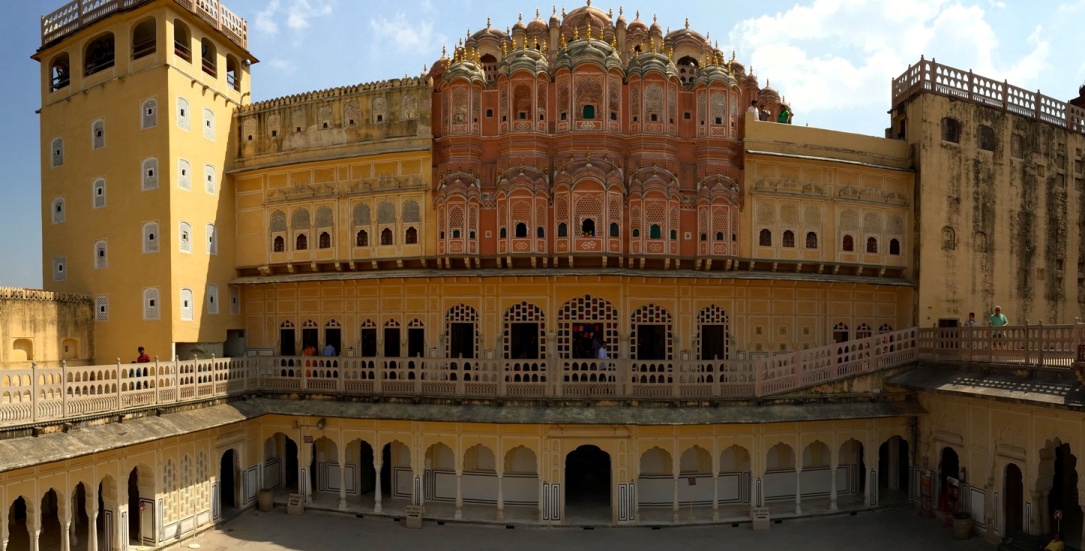
The imposing Mehrangarh Fort in Jodhpur stands tall on a rocky hill and offers panoramic views of the city. Its museums display an impressive collection of royal artefacts. Jaipur's iconic Hawa Mahal, also known as the "Palace of Winds," is a unique five-story structure with a honeycomb façade. It was built to allow royal ladies to watch street processions while remaining hidden from view. Chittorgarh Fort, one of the largest forts in India, narrates stories of Rajput bravery and chivalry. Its massive walls, towers, and temples make it a fascinating historical site.
A canvas of diverse landscapes
Beyond its royal heritage, Rajasthan boasts a diverse and captivating natural landscape. The Thar Desert, also known as the Great Indian Desert, stretches across Rajasthan and offers a surreal landscape of golden sands and undulating dunes. A camel safari through the desert is an unforgettable experience. Rajasthan's only hill station, Mount Abu, is a lush oasis amid the arid terrain. The cool climate, serene lakes, and verdant forests make it a perfect retreat for nature lovers. Keoladeo National Park, a UNESCO World Heritage Site, is a haven for birdwatchers. It is home to over 370 species of birds, including migratory ones, making it a paradise for ornithologists. Ranthambore is famous for its tiger population and is one of the best places in India for tiger sightings. The park's diverse wildlife and picturesque landscapes add to its allure. Pushkar, a sacred town, is centred around the tranquil Pushkar Lake. The ghats and temples around the lake make it a spiritually significant and visually appealing destination.
Jewels in the desert crown
Rajasthan's major attractions are like precious gems, each with its unique brilliance. Jaipur, the capital of Rajasthan, is known for its pink-hued buildings and rich cultural heritage. The Hawa Mahal, Amber Fort, and City Palace are just a few of the city's treasures. Udaipur, with its romantic lakes and palaces, is often called the "Venice of the East." The Lake Palace, City Palace, and the serene boat rides on Lake Pichola are enchanting experiences. Jaisalmer, situated in the heart of the Thar Desert, is renowned for its golden sandstone architecture. The Jaisalmer Fort, Patwon Ki Haveli, and the desert safaris are major draws. Jodhpur, with its blue-painted houses, is dominated by the majestic Mehrangarh Fort. The Umaid Bhawan Palace and Jaswant Thada are other highlights of this vibrant city. Pushkar is famous for its annual camel fair and the only Brahma Temple in the world. The town's spiritual aura and the bustling bazaars make it a unique destination.
Thrills in the desert winds
Rajasthan offers a range of adventurous activities that will get your heart racing. Embark on a desert safari in the Thar Desert to witness the mesmerising dunes. Camel safaris, jeep safaris, and even hot air balloon rides are available for adventurers. Jodhpur offers an exhilarating zip-lining experience from the ramparts of Mehrangarh Fort. Soar above the city and enjoy breathtaking views. The Aravalli Hills in Rajasthan offer excellent trekking opportunities. The rugged terrain and scenic beauty make it an exciting adventure for trekkers.
Where the wild roams free
Rajasthan's wildlife sanctuaries and national parks are home to diverse flora and fauna. Sariska Tiger Reserve, known for its tiger population, but it also houses leopards, hyenas, and a variety of bird species. Jeep safaris are the best way to explore this reserve. Located in Jaisalmer, the Desert National Park forms a unique ecosystem in the Thar Desert. It's home to a variety of wildlife, including the elusive great Indian bustard. Tal Chhapar wildlife sanctuary is a haven for bird enthusiasts, especially those interested in raptors like eagles and harriers. It's also home to the blackbuck antelope.
A feast fit for royalty
Rajasthan's cuisine reflects its royal heritage and arid landscape. This iconic Rajasthani dish consists of round wheat flour bread (baati) served with a spiced lentil curry (dal) and a sweet, crumbly mixture of wheat flour and sugar (churma). Laal Maas is a fiery Rajasthani mutton curry made with red chillies and spices. It's a must-try for those who enjoy spicy food. Ghevar is a popular Rajasthani sweet, especially during festivals like Teej and Raksha Bandhan. It's a round, disc-shaped dessert made from flour, sugar, and ghee. Mirchi Vada is a spicy snack where green chillies are stuffed with spiced potato filling, coated in gram flour batter, and deep-fried to perfection.
A fusion of colours and traditions
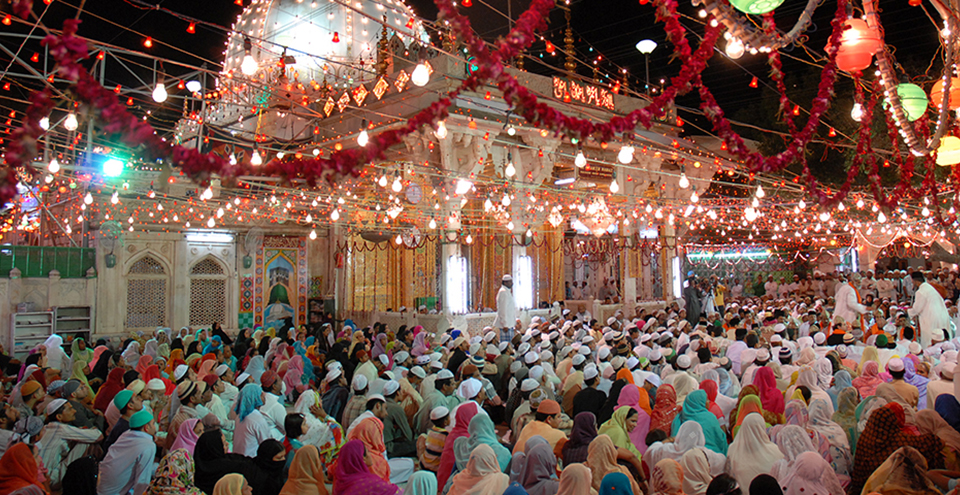
Rajasthan's festivals are a vivid celebration of its rich culture and traditions. The Pushkar Camel Fair is a mesmerizing spectacle where thousands of camels, horses, and cattle are traded. It's also a cultural extravaganza with folk music, dance, and competitions. Diwali, the festival of lights, is celebrated with grandeur in Jaipur. The entire city is illuminated, and fireworks light up the night sky. Gangaur is a women-centric festival celebrated with great enthusiasm in Udaipur. Women dress in colourful attire and carry idols of the goddess Gauri in a grand procession.
Rajasthan is a living, breathing testament to India's rich history, vibrant culture, and diverse landscapes. Come, step into the pages of a fairy tale, where palaces and forts whisper stories of valour, where deserts stretch endlessly, and where the spirit of adventure and discovery knows no bounds.
How can I come to Rajasthan?
🚇 RAIL
Rail is one of the best ways to travel to Rajasthan from anywhere within India as it is both, comfortable and economical. The state is well-connected to all the major cities across the nation and there are several routes to opt from. The major railway stations of Rajasthan are Jaipur, Kota, Bharatpur, Bikaner, Ajmer, Alwar, Udaipur, Abu Road and Jodhpur. But out of this lot, Jaipur and Kota are major hubs connecting the major cities of India to Rajasthan.
✈️ Air
Rajasthan is a tourist hub and therefore well-connected by air. Whether you're flying in from within the country or from another one, you'll find that there are a host of options you can choose from based on your itinerary. The three major airports of Rajasthan are Sanganer International Airport in Jaipur, Jodhpur Airport and Dabok Airport in Udaipur. While Sanganer is open to domestic and international air traffic, Jodhpur and Udaipur only serve domestic routes and Jodhpur also doubles up as a base for the Indian Air Force. These three airports collectively connect Rajasthan to most major cities in India, with Jaipur Airport also offering connections to some international destinations such as Muscat, Singapore, Abu Dhabi etc. Jaisalmer has the civil airport facility and has direct air connectivity from Jaipur, Delhi, Mumbai, Bangalore and Surat. Airport at Kishangarh (Ajamer) and airport at Bikaner are also operational for domestic flights.
🚕 Road
Rajasthan has 20 national highways passing through the state, spanning a distance of about 6373 kms. The NH-8 which connects Mumbai to Delhi is the busiest national highway in Rajasthan and runs through Ajmer, Jaipur, Udaipur and Chittorgarh. Besides the NH-8, Rajasthan is also connected to other major cities in India such as Delhi, Ahmedabad and Indore by state highways. You can very well choose to drive to Rajasthan or hop onto a bus operated by the Rajasthan State Road Transport Corporation, if you prefer travelling by road.
BEST TIME TO VISIT
Set amidst the rustic Aravalli mountain ranges and the golden-sandy Thar Desert, Rajasthan is indeed a place that is unparalleled and in it is true in its own right. Bordered by the states of Punjab, Haryana, Uttar Pradesh, Madhya Pradesh, Gujarat, and the Pakistani provinces of Punjab and Sindh, Rajasthan holds many gems and secrets within its borders that have always managed to interest and draw tourists from different parts of India as well as from all over the world.
From majestic forts, such as those of Amer and Mehrangarh, and significant religious attractions like the Dilwara Jain temples and Karni Mata temple, to spell-binding royal structures, such as the Umaid Bhawan palace, Rajasthan has it all. Comprising of both exotic destinations, such as Udaipur, Jaipur, Jodhpur, and Jaisalmer, as well as quaint, rural settings like that of Bundi and Alwar, the state of Rajasthan has something or the other to offer to all kinds of tourists.
Despite being popular among tourists as the dessert-state of India, Rajasthan is rich in flora and fauna as well, as it also home to a plethora of national parks and wildlife sanctuaries that are located in the state. Home to peculiarities, such as the world’s oldest ploughing field, the nation’s largest district, and the oldest mountain range as well as colour coded cities, Rajasthan promises to exceed the expectations of all those who decide to visit it.
The best time to visit Rajasthan will mostly depend on what you plan to do when you visit the state. While the summers are rather hot in Rajasthan, they may not be the best time to visit Rajasthan, as the temperatures may severely impact your sightseeing schedules, winters are generally considered to be the best season to visit Rajasthan. However, it all depends on what you plan to do and how much you can stand the heat. Some knowledge about what the temperature and weather is like during the year can help you in better planning your itinerary.
Rajasthan during the different times of the year
Given its location and geography, the state of Rajasthan mainly experiences three seasons, those being - winters, monsoon, and summer.
Winters – The winters are marked as being the best season to visit Rajasthan. While various parts of India experience an extreme drop in temperatures and chilly weather, the princely state enjoys a mild weather with temperatures ranging between 10°C – 30°C for most parts. Winters in Rajasthan usually commence around October and extend to January. While it is nice and sunny during the day, it is mostly the nights that get chilly during this time of the year.
Another significant reason that makes winters the best time to visit Rajasthan is the series of colourful and exciting fairs and festivals that take place in various cities. Some of the most popular festivals that the state is known for, including the Jaipur Literature Festival, Udaipur World Music Festival, Camel Fair, and Pushkar Fair, are observed during the winter season.
So, visiting Rajasthan during the winters will enable you to witness the culture of Rajasthan a little closely.
Monsoons – The South-West Monsoon and Western Disturbances are the main causes of rainfall in Rajasthan. The Aravalli range running across Rajasthan from Guru Shikhar in the south west to Khetri in the north east, divides the state in a 60 by 40 ratio. So, while 60% of the state lies to the north west of the range, 40% of it lies to the south east. Lying parallel to the incoming southwest monsoon winds, the mountain range fails to intercept them, resulting in a dry and sandy north west region. On the contrary, the eastern and south eastern parts of Rajasthan are both better watered and more fertile. Rainfall in Rajasthan ranges in between 100-165 mm during the monsoon season. The presence of impervious rocks in the western parts of Rajasthan can also sometimes cause them to flood up.
Visiting Rajasthan during the monsoon season, you will be welcomed by lush greenery, rainbows, and peacocks dancing around. You will also get to catch up on some cultural extravaganzas, as various parts of the state ready up for the Teej festival in the monsoon season.
Summers – Summers in Rajasthan are usually hot and dry, with temperatures rising up to as high as 48 degrees Celsius. Scorching heat and high temperatures make things challenging for people here. Temperatures in areas around the Thar Desert are usually the harshest. However, summers in places like Mount Abu, Ranakpur, and Kumbhalgarh in Rajasthan, which are the places to which tourists mostly flock to when visiting the state in this season, are rather pleasant.
For people who have a problem with extreme weather conditions, this might not be the best time to visit Rajasthan. However, if you plan on coming to Rajasthan during this time of the year, make sure that you bring along things like sunscreen and comfortable and light cotton clothes with you. It will also help save you from sunburns if these attires are full-sleeved.
TEMPERATURE & RAINFALL AROUND THE YEAR
-
January to March
50F - 80F
10°C - 27°C
4MM - 7MM -
April to June
75F - 105F
24°C - 45°C
11MM - 30MM -
July to September
70F - 95F
21°C - 35°C
100MM - 165MM -
October to December
55F - 85F
13°C - 30°C
3MM - 8MM
Nearest Airports :
Jaipur International Airport (JDH)
Jaisalmer Domestic Airport (JSA)
Bikaner Domestic Airport (BKB)
Kota Airport (KTU)