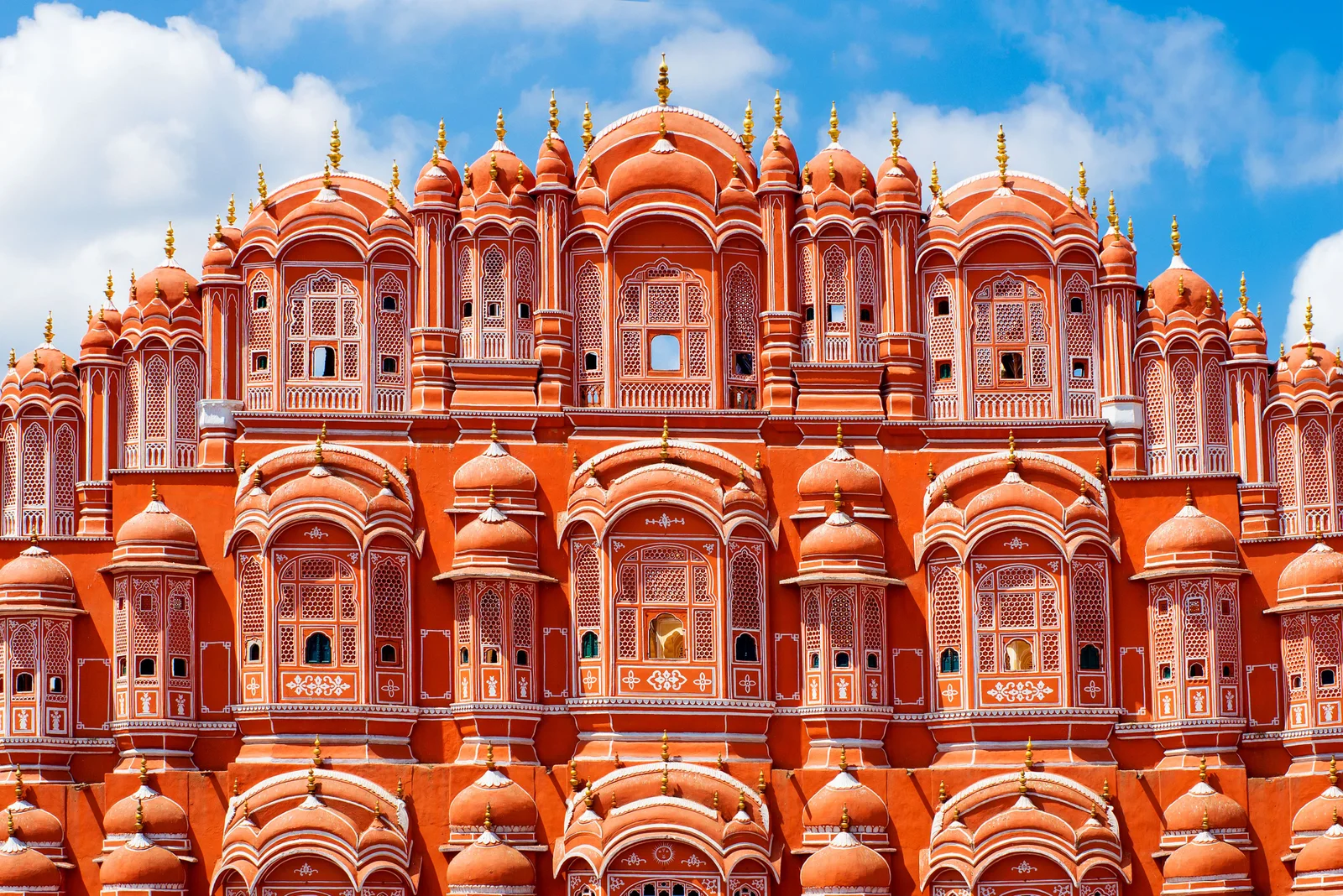
Hawa Mahal
Hawa Mahal Rd, Badi Choupad, J.D.A. Market, Pink City, Jaipur, Rajasthan 302002
0/5
0% of guests recommend
Tour Type
Historical & Cultural Tours
Location
Jaipur
Overview
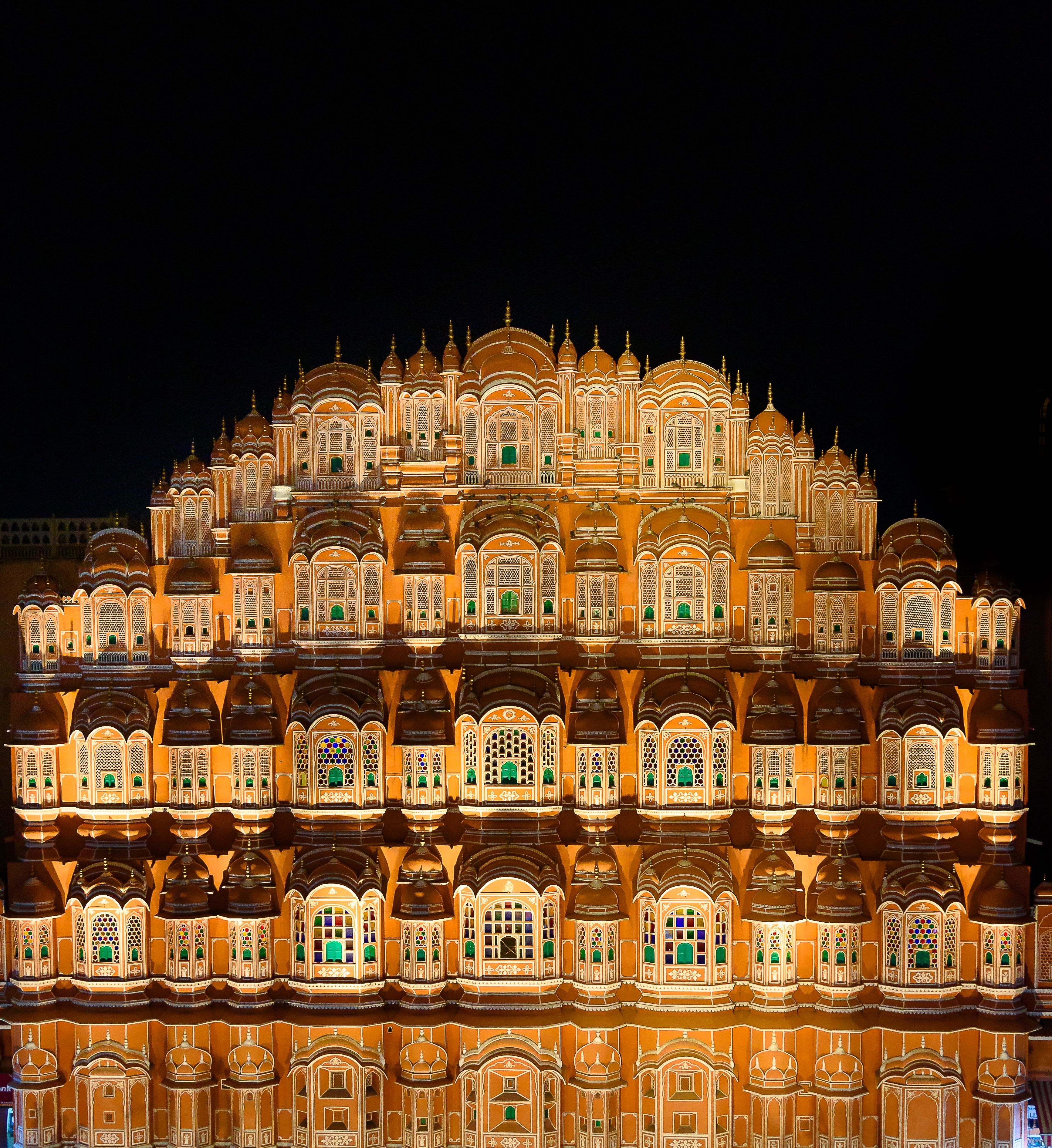
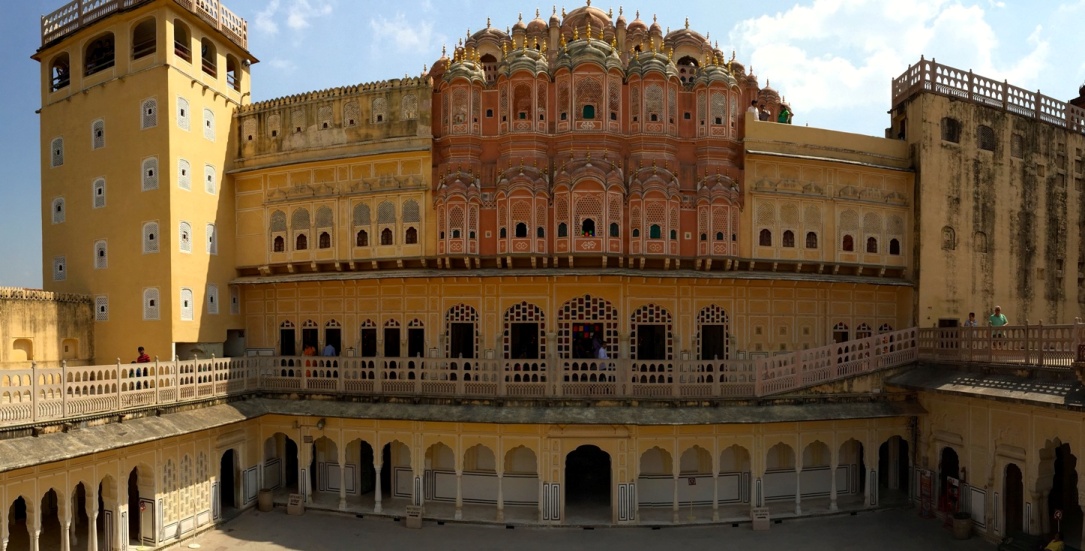
Hawa Mahal was built by Maharaja Sawai Pratap Singh in the year 1799 under the supervision of architect Lal Chand Ustad. He designed the facade of this palace like crown of his deity Lord Krishna. This 87-foot-high-pyramid-shaped, five-storied structure has 365 windows. Each storey is designated with distinct names: Sharad Mandir, Ratan Mandir, Vichitra Mandir, Prakash Mandir, and Hawa Mandir. The main entrance of the palace is known as Anandpoli and The second one is Chandrapoli. There is a huge tank with fountains in the second courtyard. To the south of this tank is Pratap Mandir, the personal room of Maharaja and Bhojanshala (kitchen) in the north. Hawa Mahal is connected to City Palace through a passage, which was used by royal females to see the Teej, Gangaur and other processions on the streets.
An architectural marvel of 953 windows
Perhaps the most stunning example of Rajasthani heritage from the time of the Royals is the Hawa Mahal (Palace of Winds), a wonder of wonders that will leave you spellbound with its architectural ingenuity.
Built in 1799 by Maharaja Sawai Pratap Singh, the grandson of Maharaja Sawai Jai Singh and designed by Lal Chand Ustad, the iconic Hawa Mahal is a cherished landmark nestled right in the heart of Jaipur. It gets its name from an astonishing 953 windows or ‘jharokhas’ cleverly designed to create a honeycombed cooling system that keeps the palace well-aired and cool, even in sun-drenched summers.
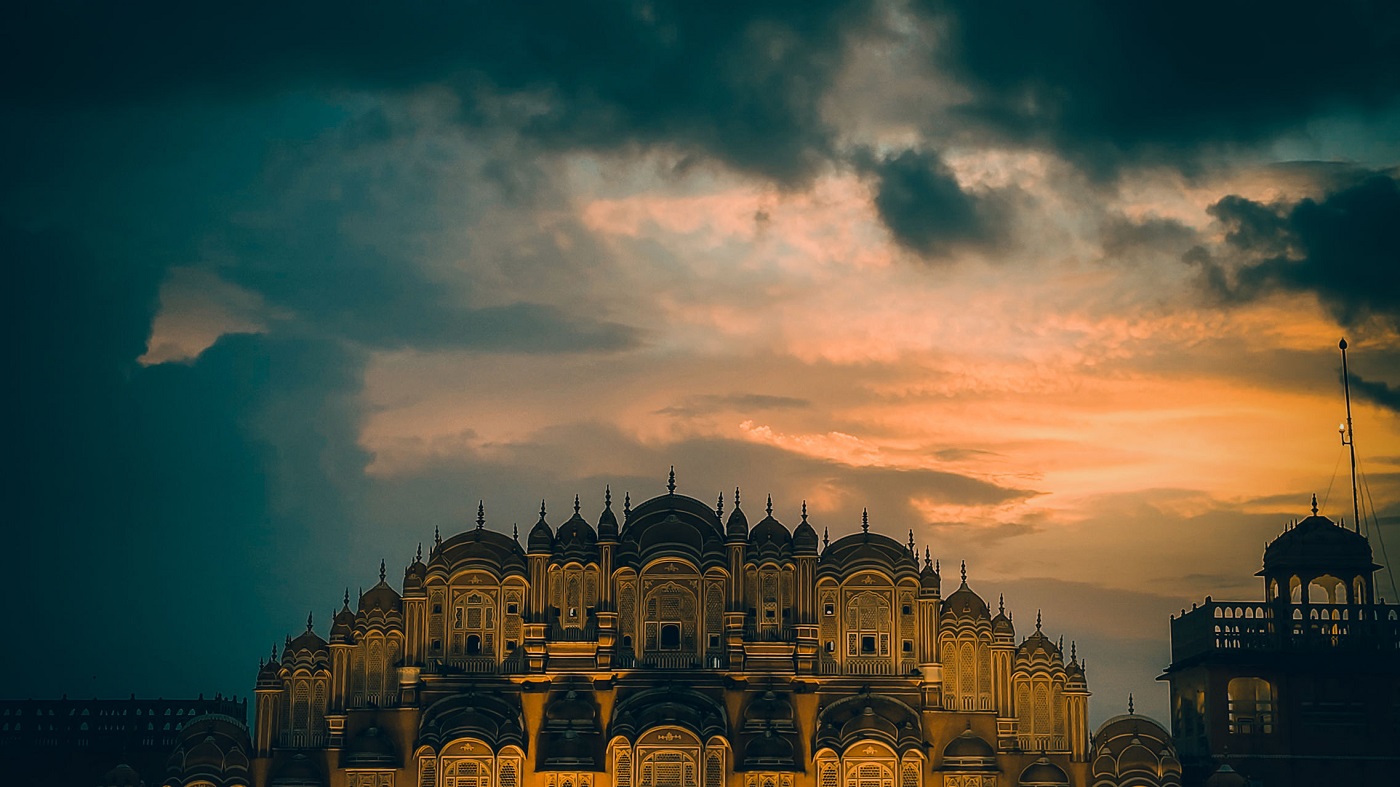
This structure is the jewel in Jaipur’s crown that gives it its iconic look. Speaking of crowns, atop this magnificent mahal rests a pyramidal structure that signifies the crown of Lord Krishna. Owing to this resemblance, it is also fondly called 'the crown of Jaipur.'
A stunning fusion of Islamic and Rajput heritage, the Hawa Mahal's architectural brilliance is evident from its lovely pink façade. However, the real delights awaiting you inside will leave you in awe of its breathtaking splendour. So, let's step inside and witness this amazing marvel.
The tallest building in the world - without a foundation!
Turn back the pages of history to 1799, and there you will see Maharaja Sawai Pratap Singh of the Kachhwaha Rajput dynasty, who decided to build the incredibly unique palace as an extension of the royal women's chamber.
In those times, purdah (a religious and social practice of gender partition) was the custom, so with the help of Lal Chand Ustad, the Maharaj designed a unique grill called the Aakash Patal Jali that helped the ladies observe the junta around Johari Bazaar, excitedly chattering and bargaining with shopkeepers and karigars (mechanics), whilst staying unseen by people on the street. The latticed windows also overlooked the central boulevard along which royal and religious processions would pass.
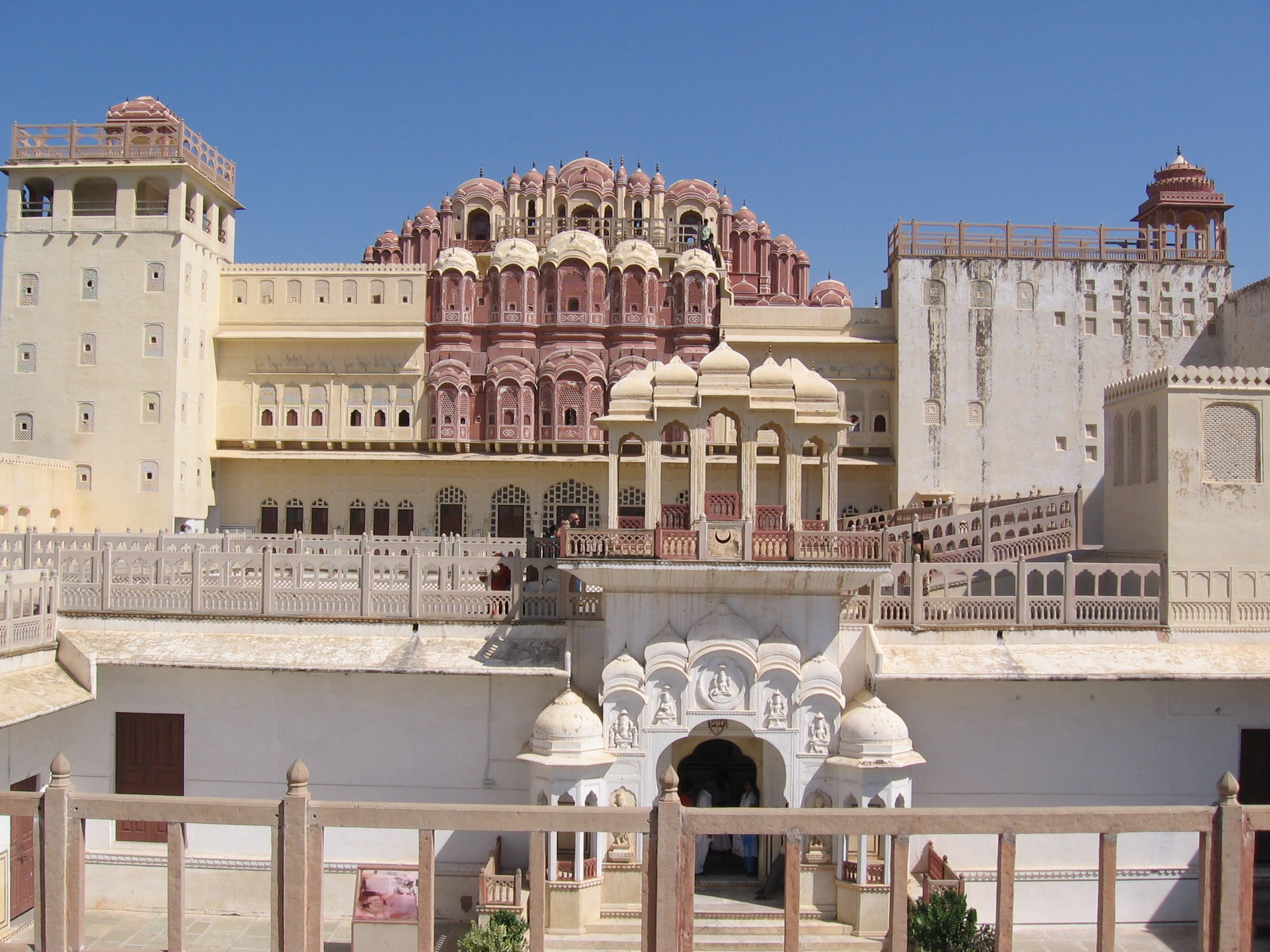
Can't wait to go in and try it out? But if you're having difficulty finding the entrance, you're not the only one. Getting inside the Hawa Mahal is an experience on its own, for strangely, there is no front entrance, only a rear one. Instead of stairs, there are ramps to the upper floors of the tallest building in the world.
Yes, you read that right. At five storeys, the Hawa Mahal is the tallest building in the world—without any foundation. This architectural wonder is possible because it is curved and leans at an angle of 87 degrees.
Incredible, isn't it?
Wonders at every level
The first floor houses the Sharad Mandir, which is decorated with colourful cultural glasswork for autumn celebrations. The second floor belongs to Ratan Mandir. The last three storeys constitute Vichitra Mandir, Prakash Mandir and Hawa Mandir.
Inside is a museum that houses Rajasthani miniature art; outside is a hub of stalls selling handmade jewellery, leather-crafted home decor items and the region's famous silver jewellery.
Pretty in pink
In 1799, the palace was built with the beautiful local pink sandstone. Fast-forward a few decades, and Queen Victoria's husband, Prince Albert, was about to visit. Pink was considered the colour of hospitality, so the Maharaja painted the entire city in a romantic, dusky pink hue to welcome him. The prince and the queen loved the colour and nicknamed Jaipur the 'Pink City'.
A law was passed that made it illegal to paint buildings in any colour other than Jaipur Pink, retaining Jaipur's status as the 'Pink City'.
Beyond the mahal
The area around Hawa Mahal in Jaipur offers attractions such as the Amber Fort, Nahargarh Fort, and Jal Mahal, all within a short distance. From the historic splendour of ancient monuments to the bustling energy of local markets, the area surrounding the Hawa Mahal promises a multifaceted exploration of Jaipur's charm.
Whether you're drawn by the Hawa Mahal's architectural brilliance or the abundance of nearby heritage sites, this iconic monument is a must-visit destination in your Jaipur itinerary. While its exterior offers great photo opportunities, make sure to explore it from the inside to get a deeper understanding of its significance.
Information
Free Entry for:
- Children below 7 years
- Disable Person
- Entry for Student groups shall be free every day between 10.00 AM to 05.00 PM on the recommendation of their respective Institute.
Free Entry days:
- On the occasion of Rajasthan Diwas
- 18th April- World Heritage Day
- 18th May-World Museum Day
- 27th September- World Tourism Day
*Student concession ticket will be issued on valid ID card.
Included/Excluded
Accommodation as per the choice of hotels/ stays
Breakfast ( Buffet / Fixed Menu )
Driver's Night Allowance, Inter State tax, and fuel charges
Meet, Greet & Assistance if required at destinations
Parking & Toll Tax
Arrival & Departure Transfers
Transfers by Private & Exclusive Car
Sightseeing by Private & Exclusive Car
Co-operative driver with local knowledge
Dinner only in Lachung & Lachen
Taxes ( GST)
Alcoholic / Non Alcoholic beverages
All personal expenses
Any Air tickets /Train tickets / Bus tickets if not specified
Camera fee
Guide Charges
Entrance fees to monuments and museum
Tips, laundry & phone call
Travel & Medical Insurance insurance
Any other services which are not mentioned under “Inclusions”.
FAQs
Where is the entrance?
The entrance is through the City Palace where doors open into a open spacious courtyard with two-storeyed buildings on three sides.
How many windows are there in Hawa Mahal?
There are 953 windows.
What is the meaning of Hawa Mahal?
The word “Hawa” means wind or breeze and “Mahal” is palace. So Hawa Mahal is the palace of breeze.
Do you know that Hawa Mahal has no foundation?
That’s correct. Hawa Mahal was built without foundation. In fact, it is the tallest building in the world without a foundation. The five-storey building managed to maintain upright because of it is curved shaped. Just another masterpiece of Rajput and Mughal architecture.
Who designed the mahal?
It was designed by Lal Chand Usta in 1799 by the order of Maharaja Sawai Pratap Singh.
What is the purpose of building Hawa Mahal?
Royal ladies were not to be seen by public. The palace was built such that the ladies can watch festival celebrations and all other activities on the street without being seen.
Why are there so many windows?
There are two purposes for the seemingly excessive number of windows. First, when there are windows everywhere, the royal ladies can look out to the street anywhere they want. Secondly, the windows allow breeze to flow through and help to keep the palace cool. It thus makes it an ideal summer palace.
What style of architecture is it?
Hawa Mahal exhibits a unique combination of Mughal and Rajput architectural styles.
What is it made of?
Hawa Mahal is carved out of red and pink sandstone.
Does it relate to any god?
The palace is devoted for Krishna and thus in the shape of Lord Krishna’s crown.
What's Nearby
Restaurants & Cafes
The Tattoo Cafe & Lounge (100m)
The Tattoo Cafe & Lounge is a rooftop cafe in Jaipur. It is situated directly opposite Hawa Mahal - a must visit place in Jaipur. Situated right at the heart of walled city, The Tattoo Cafe & Lounge offers iconic view of the Hawa Mahal and serves delicious multi cuisine food. We charge for commercial photo shoots, wedding shoots documentaries etc. It’s a restaurant first not only photography point so make sure to order before clicking pictures. Tables are subject to availability, we take cover charges everyday per person those are adjusted against your bill
Govindam Retreat (500m)
Govindam Retreat is located Near Govind Devji Temple, City Palace Museum in Jaipur. Govindam Retreat preserves the significance of Rajasthani culture and heritage. We provide a unique experience to its guests in hospitality & serving Indian and non-Indian selections. Traditional breakfasts, noon-time snacks wide range of food - from soups, snacks, salads, Rajasthani dishes and desserts. It is a concept capturing the vibrant spirit of Rajasthan & ensuring a perfect Rajasthani experience. Inbound and native tourists have a desire to experience the unique Rajasthani culture. The real Rajasthan is the Royalty, the enthusiasm, the 'manuhar' (a delicate request to eat till your heart’s desire), the traditions, the costumes and last but not least, the feelings. Our aim is to preserve and encourage the Rajasthan royal art and culture. Govindam Retreat best Vegetarian Restaurants in Jaipur, for Kitty party, Family Meeting, Get together Meeting, Birthday Party, Ring Ceremony in Jaipur.
Hawk View Restaurant & Bar (700m)
The Restaurant is on The Roof of a Heritage built Hotel Royal Sheraton and is located near by the City Palace . One can enjoy a cold Beer and rest from the days journey while exploring Jaipur . The 360* View of the roof is its USP as it offers an unparallel view of Pink City which you can't get from anywhere else .
Wind View Cafe (2km)
Enjoy the fine taste of Coffee with the majestic view of the Old Pink City
Tour Location
Hawa Mahal Rd, Badi Choupad, J.D.A. Market, Pink City, Jaipur, Rajasthan 302002
Reviews
0/5
Not Rated
Based on
0 review
Excellent
0
Very Good
0
Average
0
Poor
0
Terrible
0
No Review
from
₹0
Tour Start Date
{{ start_date_html }}
Tour End Date
{{ end_date_html }}
Last Booking Date
{{ last_booking_date_html }}
{{ start_date_html }}
{{ type.desc }}
{{ type.display_price }} per person
Extra prices:
({{ type.price_type }})
{{ type.price_html }}
Discounts:
{{ type.from }} - {{ type.to }} guests
from {{ type.from }} guests
- {{ formatMoney(type.total) }}
({{ type.price_type }})
{{ type.price }}%
{{ formatMoney(type.price) }}
- {{ total_price_html }}
- {{ pay_now_price_html }}
from
₹0